We recommend that you always use the latest version of your browser.
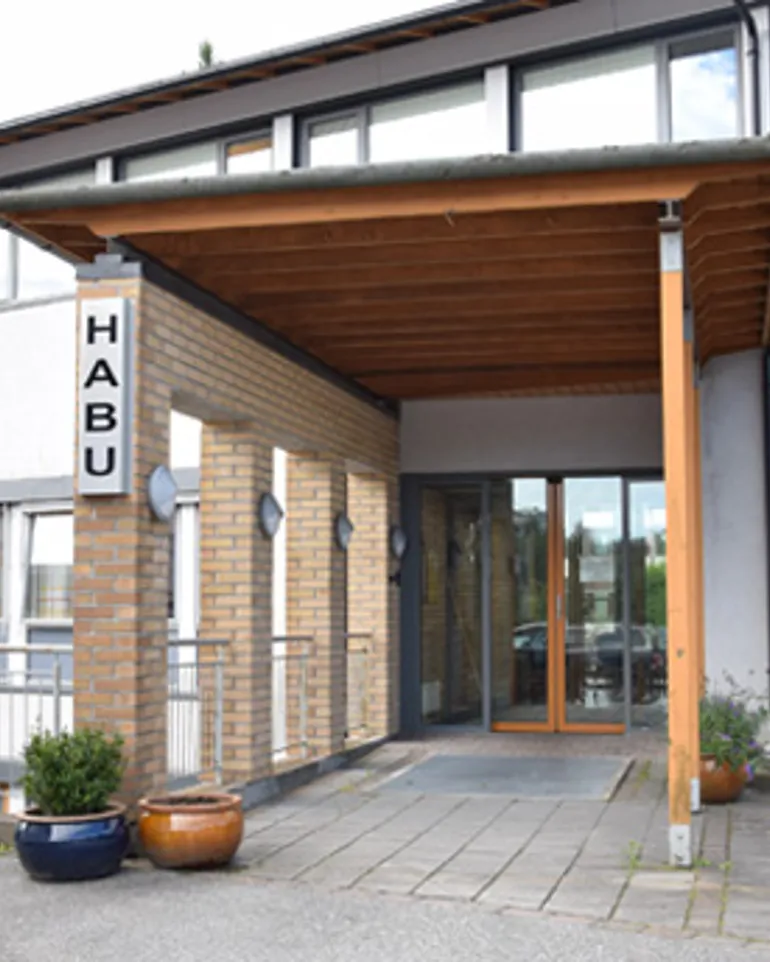
En bygning med et skilt på forsiden

Regional Centre for Intensive Child Rehabilitation (RIB)

We offer five different intensive, goal-oriented treatment and rehabilitation programmes for children and young people under 18 with congenital and/or acquired brain injuries. Four of the programmes are group-based, usually with 4–6 children in each group. The programmes include information and updates for you as parents, support with coping in your own lives, and guidance on training and stimulating your child. The programmes are delivered in collaboration and dialogue with the support services in the child’s home municipality and the child’s local habilitation service (HABU).

We emphasise the mutual sharing of knowledge and experience in all our rehabilitation programmes. RIB primarily offers services to children and young people in the South-Eastern Norway Regional Health Authority area. If places are available, we accept children from across the country.

The centre’s remit is to offer various rehabilitation programmes to children and young people with different types of brain injury/disability, and to conduct research, professional development and knowledge dissemination. The programmes usually consist of intensive periods with group sessions in Kristiansand, followed by training at home in the child’s familiar environment. Between group sessions, we are available to provide advice and guidance to you as parents and to local support services. Our intensive programmes supplement the regular follow-up children receive from their municipality and local specialist health services.

We believe that training with children should be goal-oriented, playful and enjoyable. Activities are adapted to each child’s functional level and training goals. Training and stimulation goals are developed jointly by parents and professionals. An overarching goal is for children to develop new skills, enjoyment of activities, positive self-esteem, resilience and self-confidence. This is achieved by giving children the opportunity to take part in challenging, exciting and varied activities with peers with disabilities. We try to find activities that each child enjoys so much that doing the activity becomes a goal in itself. We believe this helps create high motivation and enthusiasm for activity in the children.

As parents of a child with a disability, you have greater and different caregiving, parenting, treatment and “administrative” responsibilities than parents generally. We have found that many parents discover resources and coping strategies that make the overall burden manageable, but we also see that many of you struggle and experience high levels of stress and strain. We are committed to supporting you in coping. We assess stress and strain, and offer reflective and supportive conversations.

Mountain safety rule no. 5 says: “Listen to experienced mountain people.” The rule applies in most situations where we, as human beings, find ourselves in somewhat new and demanding circumstances. There is good research evidence to support the view that you, as parents of children with disabilities, can benefit greatly from sharing experiences with other parents. Many feel that they share a unique bond with parents in a somewhat similar situation. Parents often feel that their roles are more equal when speaking with one another than they do when meeting with us healthcare professionals. Mutual encouragement and support between parents come easily, and the threshold for asking for advice is low. The advice is often practical, given in everyday, easy-to-understand language, and based on personal experience. There is a great deal of insight into one another’s emotional and practical circumstances, and parents readily feel understood. Emotional reactions they have or have had are also seen as common and normal. In line with this approach, we facilitate the sharing of experiences among you parents during your stay at RIB.

Please note that we are unable to offer services to siblings, and that they may only participate in activities with the children in the group on rare occasions and by prior arrangement. If a respite carer/other family members are to attend selected parts of the programme by prior arrangement, their accommodation must be organised and paid for separately.

We take a family-centred approach and emphasise that you, the parents, are the people who matter most to your children’s wellbeing and development. We focus on supporting you in coping with everyday challenges and your role as parents. Our family-centred approach involves helping you understand your child’s strengths and challenges, and how you and local professionals can best support your child’s development. We believe that every child has great untapped developmental potential.

We strongly believe in the value of peer-to-peer experience sharing. This includes sharing experiences among children and young people, between you as parents, and between you and your children. We therefore place great emphasis on creating good settings and meeting places for this exchange of knowledge.

Our approach to stimulation, training and treatment is multidisciplinary. This means that we draw on knowledge from several fields, including child psychology, movement science, physiotherapy, education, medicine and disability studies. Our treatment team consists of experienced professionals from different disciplines: physiotherapists, occupational therapists, psychologists, special education teachers and paediatricians. Our programmes are based on recognised, evidence-based methods. We are in contact with national and international professional communities and strive to apply the latest and best knowledge in the services we provide to each child and family. In particular, we draw inspiration and knowledge from the internationally renowned CanChild community (read about them at www.CanChild.can). We continuously develop our programmes in light of new knowledge, research findings and user experiences. Please note that changes to the treatment programmes may therefore occur.

All teaching and guidance is provided in Norwegian.

The child must be referred to RIB through the specialist health service. The referral must specify which programme the child is being referred to. We would like the referral to include an up-to-date description of the child and copies of previous assessment reports. We would also like you as parents to send us any information that may help us adapt and design a suitable programme for your child.

We accept referrals to all our rehabilitation programmes on an ongoing basis. Referrals are assessed in accordance with the applicable deadlines at the time, and we send a response to both the guardians and the referring professional.

We are located in our own adapted facilities at the hospital in Kristiansand. We have training, video-conferencing and meeting rooms, and also have access to an adapted patient hotel where families can stay during their visits.

RIB provides intensive rehabilitation programmes as part of the specialist health service, and there is no participation fee. Reimbursement for the cheapest mode of travel may be claimed through Pasientreiser (information at www.pasientreiser.no or by calling 91505515). Parents may apply for compensation for lost earnings in the form of training benefits, pursuant to sections 9-10 and 9-13 of the National Insurance Act.

Contact

Postal address

PO Box 416 Lundsiden, 4604 Kristiansand

How to find us

Location

HABU premises, building 41 at Eg. Please register at our reception when you arrive. If you need confirmation that you have attended a consultation at HABU, please contact reception.

Egsveien 100, building 41

Egsveien 100, building 41

Egsveien 100, 4615 Kristiansand

You can reach our locations by public transport. Visit Agder public transport to find your route:akt.no

You may be entitled to reimbursement of necessary expenses when travelling to and from your place of treatment.

You should generally use public transport, and you must pay a co-payment. To claim reimbursement for travel expenses you have paid, complete a travel expense claim form and send it toPasientreiser.

Practical information

Is the appointment inconvenient? If you receive your appointment letter digitally at helsenorge.no, you can now send a message directly to the department you are due to visit if you need a new appointment time. You must be a registered user of helsenorge to access the service.
You can also contact the department where you have an appointment or call the switchboard on: 38 07 30 00
​

Children and young people are affected when someone in the family is ill and need to understand what is happening. You may be a patient, a relative, or a parent of sick children who have siblings. We at the hospital will help ensure that children and young people in your family are well cared for.

Children as next of kin

RIB offers accommodation in our Family House. The Family House is located next to HABU/RIB and has two apartments and four family rooms that can be used free of charge during your stay.

All rooms in the Family House have a private bathroom with a shower and cooking facilities. Internet access, a telephone, TV/radio and a refrigerator are also available. During the day, guests can use a washing machine, tumble dryer and iron. Bed linen and towels are provided.

In connection with the family house, there is an adapted outdoor area with play equipment.

If you need accommodation during your stay, you can contact HABU’s reception (see contact information).

If you have a serious illness that requires treatment or follow-up over a period of time, you may be entitled to have a contact doctor assigned to you in the specialist health service.

The contact doctor scheme in the specialist health service is intended to ensure that your follow-up as a patient is better, safer and more effective. Having a contact doctor is a right for you as a patient and an obligation for the specialist health service.

The contact doctor’s responsibilities

The contact doctor has a particular responsibility for following up with you during treatment or follow-up in the specialist health service. The contact doctor’s responsibilities are to:

  • be your regular medical contact throughout your entire course of care
  • be involved in your treatment or follow-up
  • stay informed about the status of your treatment
  • help ensure that your course of care proceeds as planned
  • contact the relevant staff / treatment unit if there are challenges with your course of care
  • inform you and your next of kin
  • be available to you and healthcare professionals for medical questions
  • A contact doctor does not replace your regular GP

Guidelines for contact doctors in the specialist health service


Parking spaces at Sørlandet Hospital are subject to a fee Monday to Friday, 8:00 a.m.–8:00 p.m. Anyone wishing to park on the hospital grounds must follow the signs and instructions on the payment machines.

At the hospital in Kristiansand, you can pay for parking with EasyPark (mobile app), card or coins at other locations. See the signs for payment options and time limits.

At the hospital in Kristiansand, you can register your parking using the EasyPark app, at a machine where you park, or via the website.

Parking website for Kristiansand

A valid disabled parking permit entitles you to free parking. 
At the entrance to the HABU building, there are three disabled parking spaces and several regular parking spaces. Vehicles displaying a disabled parking permit are exempt from time limits unless otherwise stated on the sign.

Nursing benefits compensate for lost income when you care for a child who needs continuous supervision and care due to illness or injury. Read more about, among other things,nursing benefits, attendance and basic benefitsandNational Insurance benefitsat NAV.

If you need an interpreter, please notify the hospital well in advance of your appointment. Interpreter costs are covered by the health service.Helsenorge.no

Patients not fluent in Norwegian are entitled to an interpreter.Helsenorge.no/interpreter

All visitors can use free wireless internet at the hospital.

Look for HSO-Gjest in your network list and follow the login instructions.

If you cannot find the network, you are in an area where it has not yet been installed.

If your child has been exposed to chickenpox or has chickenpox, please contact us. The scheduled appointment/admission will then need to be postponed. This also applies if you are planning to visit the paediatric and adolescent department. Chickenpox can be dangerous for some of our patients.

TEST VERSION
Machine-translated copy of sshf.no for testing only. Not official information.